Health care for ageing dogs and cats
Caring for an ageing pet requires the owner to be very observant and sensitive in reacting to changes in the pet, because an older pet takes longer to recover, and recovers more slowly, than younger animals. The owner knows their pet best and is the best person to notice early changes in the pet. Together with the care given by the veterinarian, the pet’s final years and their quality of life can be influenced in many different ways.
It is important to know which things in the pet’s behaviour deserve special attention and which diseases are the most common problems of ageing dogs and cats. An older pet should be taken to the veterinarian for a thorough health check every year, for example at the same time as vaccinations, and it is also a good idea to check basic blood values, for example to make sure the internal organs are working properly.
A cat’s old age begins at around 10–15 years of age, and a dog’s, depending on its size, at around 6–8 years of age. Small dogs often live longer than large dogs.
Ageing is a natural process in which changes occur, for example, in sight, hearing and smell, hormone function, energy metabolism and the internal organs. The animal is also more susceptible to infectious diseases as its immunity weakens.
An ageing pet needs a lot of love, individual care, a stress-free living environment and time. The changes of ageing cannot be prevented, but the progression of diseases can be slowed if they are diagnosed at an early stage and treatment can be started in time.
Nutrition and oral care
An ageing pet’s calorie requirement decreases, and so getting essential, good-quality proteins and fatty acids becomes more important. An older pet should be given varied, good-quality food. Reduced activity and a slower metabolism make the pet prone to becoming overweight. Being overweight predisposes the pet to a great many diseases, strains the heart and clearly worsens the symptoms of, for example, osteoarthritis, so staying at the ideal weight is very important. However, an older pet should lose weight in a controlled way, preferably with a weight-loss diet recommended by a veterinarian.
A poorer appetite and weight loss are often a sign of a chronic, serious illness. If the pet no longer enjoys its food bowl as normal or loses weight despite a good appetite, it should always be examined by a veterinarian.
Oral care is surely one of the most common things that gets too little attention in pets. The build-up of plaque and tartar predisposes the mouth to inflammation, destroys the tissue supporting the teeth and makes teeth more likely to fall out. A mouth in poor condition predisposes the pet to, among other things, inflammation of the heart muscle and releases huge numbers of bacteria into the bloodstream. In addition, eating can become painful and the animal’s appetite may decrease because of the pain. The cornerstone of oral health is home care, and the best method is tooth brushing. Dental treatment at the veterinarian should be carried out regularly, as needed. The condition of the teeth is checked and the need for treatment assessed at every veterinary visit.
Stiffness and reluctance to move
An ageing pet moves more calmly, and there is less leaping for joy and playing around. In addition to these normal changes, the pet very often suffers from osteoarthritis, which is a very common disease in both dogs and cats.
According to the latest research, as many as 80% of cats over 12 years old have osteoarthritic changes. The symptoms of osteoarthritis include reduced activity, reluctance to use stairs and jump, getting up or lying down stiffly, and so on. Cats may plan their jumps and jump onto lower surfaces than usual; they may also groom themselves less and have difficulties in the litter tray (e.g. difficulty passing stools). Limping only appears after these symptoms; in dogs, limping is seen more often and more readily.
Osteoarthritis is a very common cause of pain in ageing pets. The symptoms of osteoarthritis can be eased in many ways, which is why it is important to discuss the above symptoms with a veterinarian and so improve the pet’s quality of life.
Changes in internal organs, hormonal changes and tumours
Older dogs and cats are more prone to chronic diseases of the internal organs, such as kidney or liver failure. Typical symptoms include increased drinking and urination, vomiting, tiredness and apathy, poor appetite and weight loss, a dull coat and reluctance to groom, changes in passing stools, and so on. Kidney and liver failure are chronic, incurable diseases, but supportive treatment can clearly ease their symptoms and often clearly extend the pet’s good-quality life. Supportive treatment slows the progression of the diseases and helps maintain the remaining function of the internal organs in a way that spares the organs as much as possible.
For example, these changes in the internal organs also lead to changes in hormone function and increase the risk of developing, for example, diabetes or thyroid disease. With the right medication and regular check-ups, these diseases can be managed quite well, even for several years.
In all these diseases, testing blood and urine samples plays a central role, so it is a good idea to test an older pet’s blood regularly.
Heart diseases are also common in ageing pets. Their symptoms are often difficult to notice because they get mixed up with symptoms associated with “normal ageing”. Typical symptoms include tiring on walks and getting out of breath more easily than usual, restless nights, loss of appetite and coughing, and in serious cases breathing difficulties. Heart diseases are identified at the veterinarian by listening to the heart and, if necessary, by a more detailed examination with either a cardiac ultrasound or X-rays. Heart diseases can also usually be treated quite effectively with the right medication. Heart diseases often occur together with other diseases of ageing pets, such as hyperthyroidism or kidney failure.
Tumours are one of the most common serious diseases of ageing pets. Tumours can be either on the skin or anywhere in the body, and malignant tumours spread easily to different parts of the body. Check your pet’s skin regularly and have any lumps that appear on the skin examined by a veterinarian. The symptoms of tumour diseases can vary a lot depending on the location of the tumour and, for example, which organs it presses on. The most common symptoms, however, are poor appetite and weight loss, anaemia, tiredness and weakness, vomiting, enlarged lymph nodes and stomach ulcers. Tumour diseases often do not show up in a blood test; when a tumour is suspected, careful palpation, ultrasound and X-rays are used to help.
Health check for an ageing pet
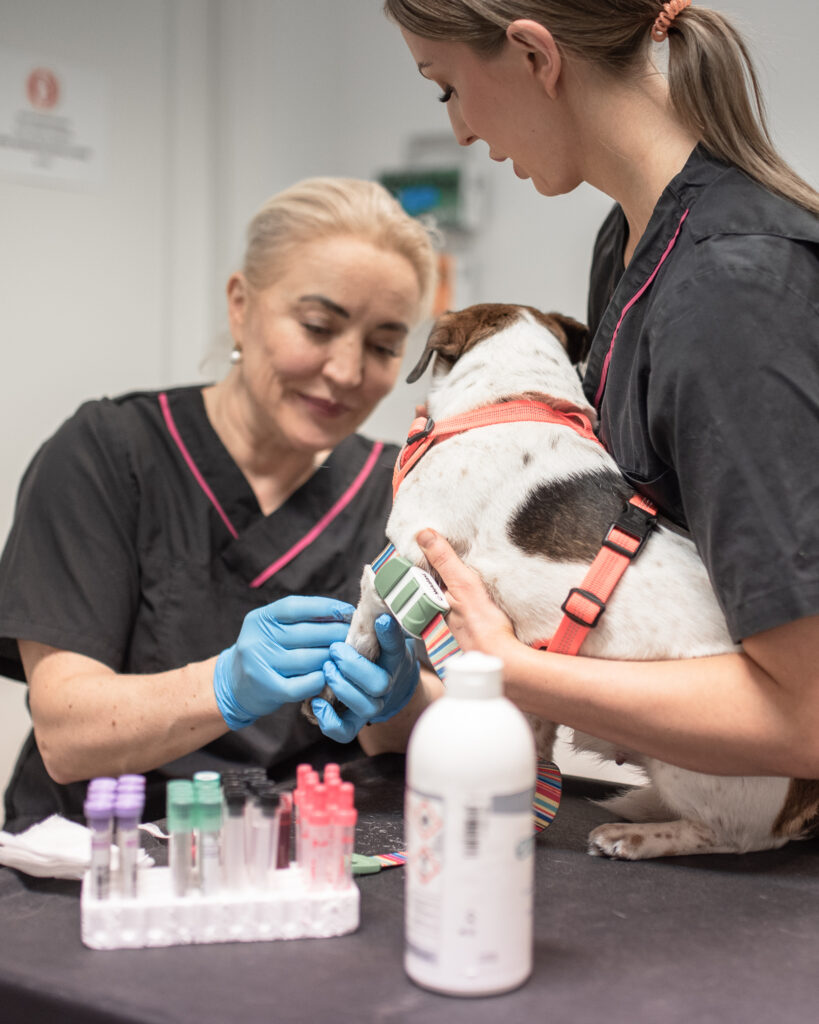
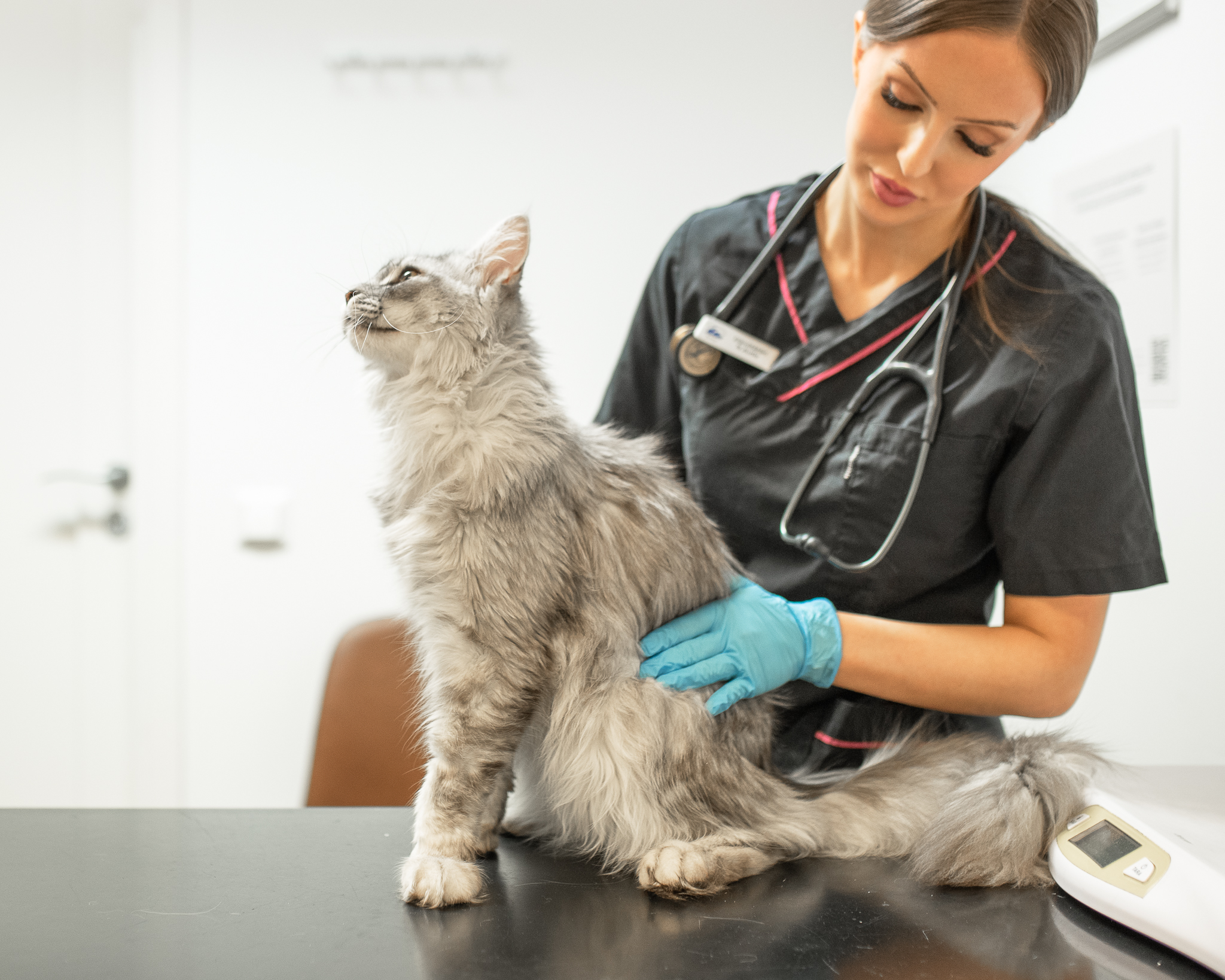
An ageing pet should have a health check every year, for example at the same time as vaccinations, and of course more often if needed if symptoms appear. In the health check, the veterinarian examines and palpates the pet from head to tail, checking the ears, eyes, condition of the mouth, lymph nodes, abdominal area, cleanliness of the rear end, in males the prostate, and body temperature. The veterinarian also listens to the dog’s lungs and heart. In addition, an ageing pet’s basic blood values should be tested every 1–2 years, even if there are no symptoms. This establishes the normal values for that particular animal, so changes in the values can be followed and reacted to quickly. In this way, many diseases can be caught before serious symptoms appear.
In addition to blood tests, urine samples can be tested if needed to check for infections and to assess kidney function. Further examinations, such as X-rays, ultrasound examinations, blood pressure measurement and so on, are carried out if needed based on the pet’s symptoms and clinical findings.
Veterinarian Aino Palola