What does NIR-ICG mean?
NIR-ICG is a modern imaging method that combines near-infrared (NIR) light and the contrast agent indocyanine green (ICG). In veterinary medicine the method is used especially in surgery and endoscopy, because it improves the visibility of tissues and helps the veterinarian make more precise decisions during the procedure.
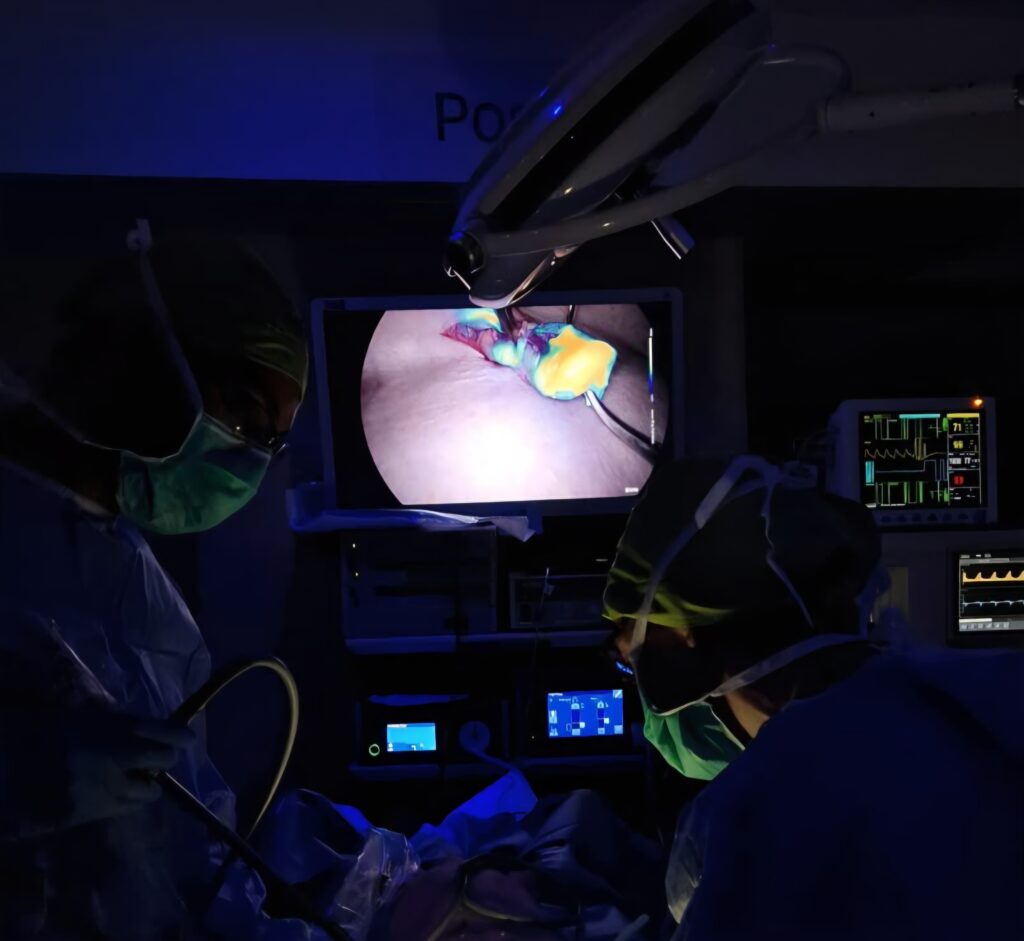
ICG is a safe dye given intravenously, which binds to blood proteins and travels quickly through the body. When the tissue is illuminated with NIR light, the dye fluoresces, allowing blood circulation and tissue structures to be seen in real time with a special camera.
What is NIR-ICG used for in veterinary medicine?
The NIR-ICG method has several uses in animal surgery and endoscopy:
1. Assessing blood circulation
The method can be used to check the blood supply of tissues during surgery. This is particularly important, for example, in:
- intestinal surgery
- skin grafts
- tumour removal
Good blood circulation reduces the risk of complications and promotes healing.
2. Determining tumour margins
ICG can help identify the boundary between a tumour and healthy tissue. This helps to:
- remove the tumour more precisely
- preserve healthy tissue
3. Mapping lymphatic vessels and lymph nodes
The method makes it possible to visualise the lymphatic system, which is useful, for example, in:
- assessing the spread of cancer
- identifying sentinel lymph nodes
4. Improving the precision of endoscopic procedures
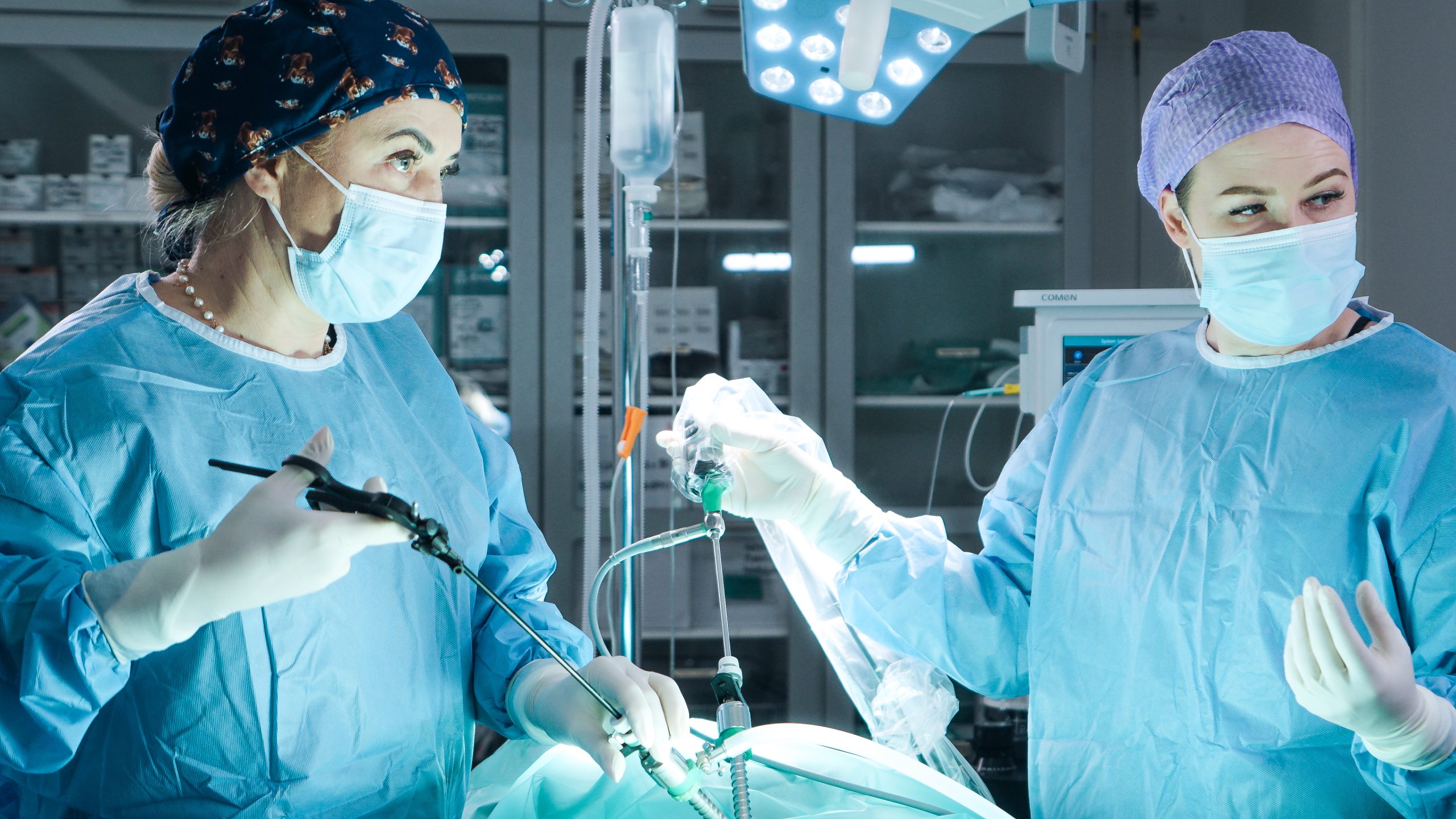
In endoscopic procedures (endoscopy and laparoscopy), NIR-ICG provides additional visibility, which makes it easier to:
- identify anatomical structures
- work more safely in confined spaces
Benefits of the method
NIR-ICG offers significant advantages over traditional methods:
- Better visibility: more precise differentiation of tissues and blood vessels
- Real-time information: no need to wait for imaging results
- Safety: reduces surgical complications
- Minimally invasive: ideal for laparoscopic surgery
- Faster recovery: more precise surgery supports better healing
Is NIR-ICG safe for animals?
ICG has also been used for a long time in human medicine and is considered very safe. Side effects are rare. The veterinarian always assesses individually whether the method is suitable for the animal in question.
The future of veterinary surgery
NIR-ICG represents a new generation of veterinary technology that combines precision, safety and efficiency. The use of the method will certainly become more widespread in the future, as it offers ever better opportunities to treat animals to a high standard and proactively. SoVet Veterinary Centre is now among the first in Finland to use the method.
Summary
The NIR-ICG method is a significant step forward in animal surgery and endoscopic procedures. It gives the veterinarian precise, real-time information about how tissues are functioning, which improves the quality of care and the animal’s recovery.