Summer is here, and adders are active in nature again. An adder bite is a fairly common emergency for dogs in Finland, and although not all bites are life-threatening, they always require a prompt assessment by a veterinarian.
How do you recognise an adder bite?
The most common sign of an adder bite is clear swelling at the bite site, which can develop quickly and be severe, especially in the head area. Two small puncture wounds a few millimetres apart can sometimes be seen at the bite site.
However, the symptoms are not limited to local changes. General symptoms can include tiredness, weakness, pain, drooling and vomiting. The severity of the symptoms is affected by factors such as the bite site, the size and general condition of the dog and the amount of venom injected.
What to do if your dog is bitten by an adder
Acting quickly and calmly is important in the case of an adder bite.
The dog should be kept as still as possible, as movement can speed up the spread of the venom in the body. Carry the dog if possible. If carrying is not possible, the move to the car should be done calmly and without unnecessary movement.
Contact a veterinarian or emergency clinic without delay and set off for treatment immediately, even if the dog seems to be in fairly good condition at first. An adder bite can cause serious internal bleeding, severe pain, swelling and organ damage. Bites to the head, muzzle and chest area are particularly risky.
What not to do
Do not medicate the dog yourself. Avoid giving painkillers, cortisone or an “adder kit” without instructions from a veterinarian.
Treatment at the veterinarian
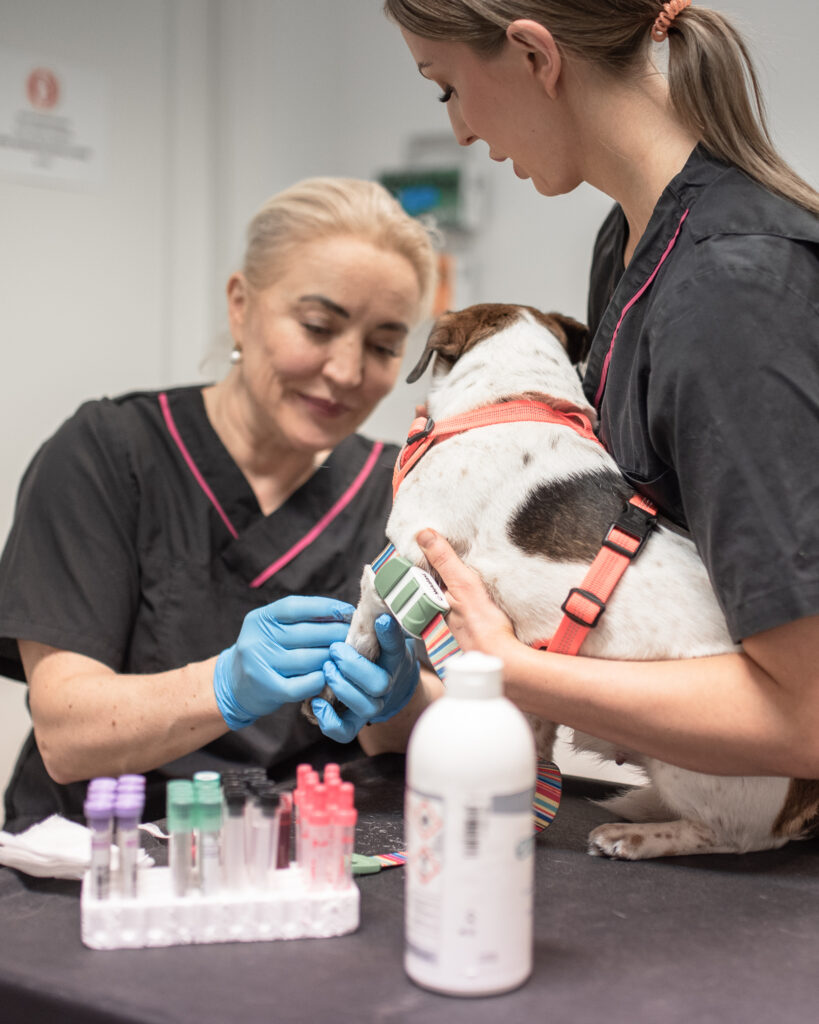
At the veterinarian, blood tests are usually carried out to assess in particular blood clotting, liver and kidney function, electrolytes and the complete blood count.
Treatment may include antivenom, fluid therapy, pain medication (often an opioid) and anti-nausea medication.
However, antivenom is used with consideration, usually when the symptoms are severe or progressing, such as severe swelling, a significant decline in general condition, clotting disorders or extensive systemic symptoms. In mild, local bites it is not always necessary, as most dogs recover well with symptomatic treatment alone. The most serious risk of antivenom is anaphylaxis, which can appear quickly after the injection. For this reason, antivenom is always given under veterinary supervision, and the patient is closely monitored during and after treatment.
According to current practice, anti-inflammatory painkillers and corticosteroids are not recommended as first-line treatment, because they can increase the strain on the kidneys.
Aftercare and monitoring
At home the dog is kept at rest for several days, usually at least a week. Exercise is limited to short walks for toilet breaks.
It is important to monitor the bite site and the dog’s general condition. The swelling may initially spread or “sink” downwards, and a bruise-like discolouration may appear in the area. After this, the situation should gradually improve.
Contact a veterinarian immediately if the dog’s condition worsens or if there is abnormal bleeding, marked paleness, problems urinating or a sudden decline in general condition.
Follow-up blood tests are recommended after recovery from the bite.
Veterinarian Nadine Wegmuller, DVM