Pyometra (Uterine Infection)
Uterine infection is a fairly common disease in unspayed female dogs, in which the uterus fills with purulent inflammatory discharge. If the disease is not noticed in time and is not treated, it can lead to serious complications and even death.
What is pyometra?
Pyometra develops when the uterus becomes infected and fills with inflammatory discharge. It is caused by the effect of hormones, especially progesterone, on the uterus. This disease is fairly common in unspayed female dogs, and it usually appears 4 weeks – 4 months after a heat.
Although pyometra is usually more common in older dogs, younger dogs can also develop it. If your dog is not spayed, this is a disease you should pay attention to.
Symptoms of pyometra
Pyometra can be difficult to detect at first, but the following symptoms may indicate it:
- Loss of appetite
- Tiredness
- Licking of the rear end
- +/- Vaginal discharge (inflammatory discharge)
- Increased drinking/urination
- Fever
- Abdominal swelling
The above symptoms may occur alone or together, or the disease may be almost symptomless. The amount of discharge depends on whether the cervix is open or closed. If the cervix is open, the discharge is visible. If it is closed, the dog can be very ill without visible discharge, and its general condition can collapse very quickly.
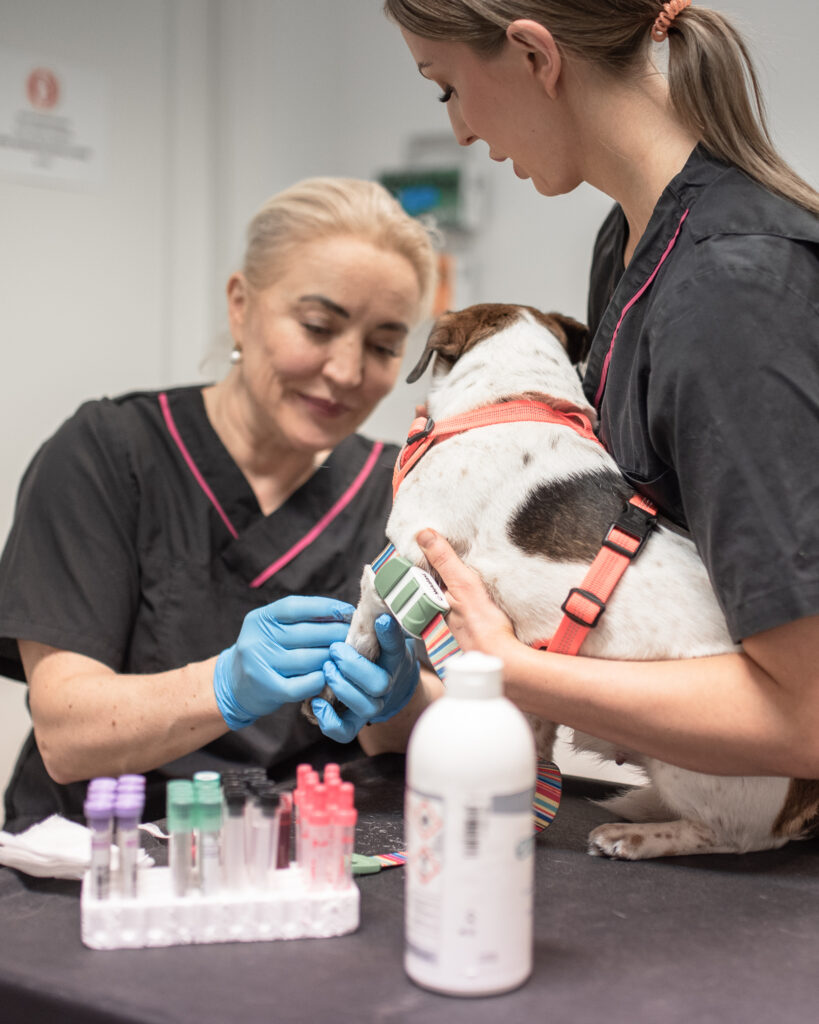
Blood tests can reveal signs of infection, such as elevated inflammatory markers. The dog may also be dehydrated.
How is pyometra diagnosed?
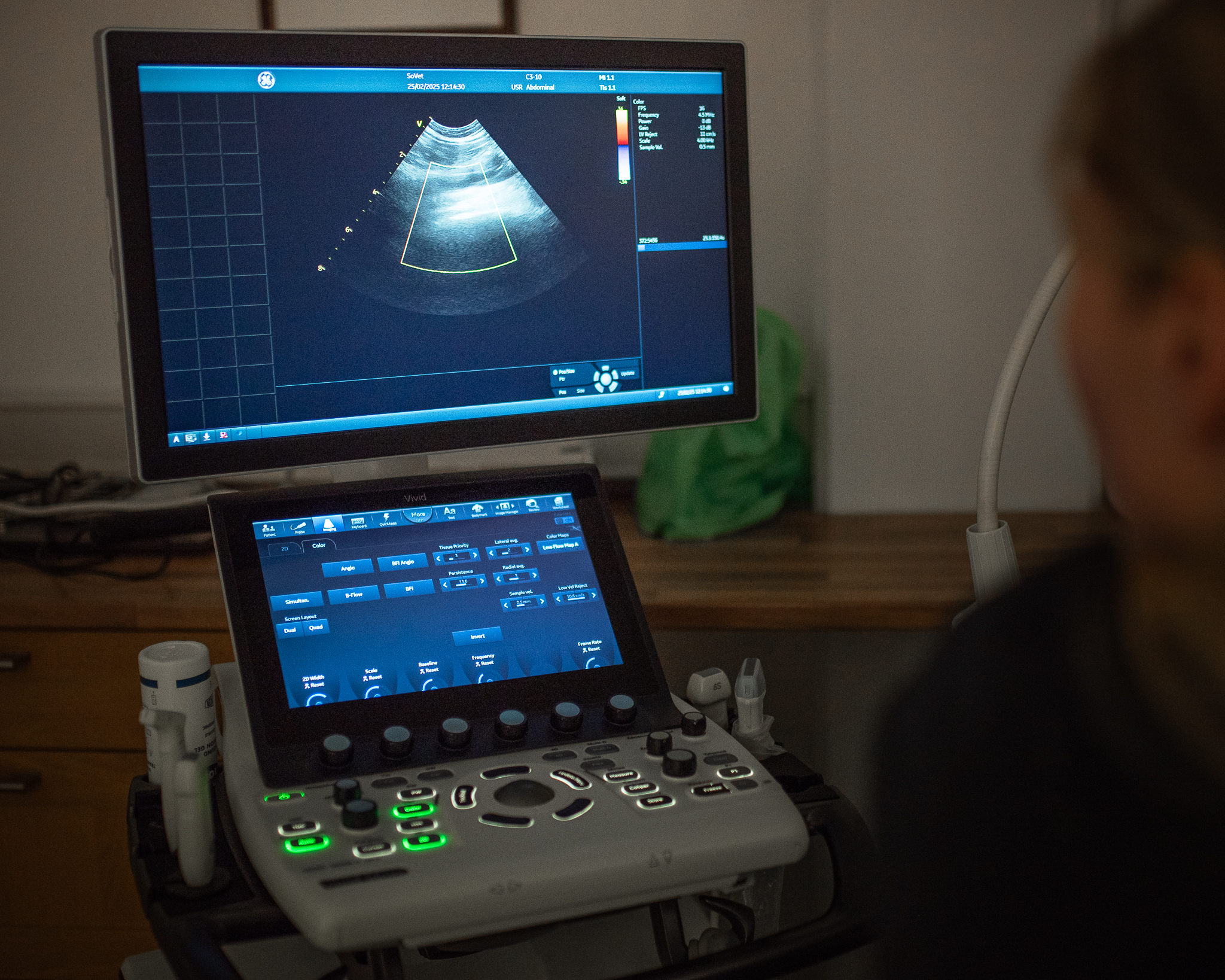
Although the symptoms and blood tests give clues, an ultrasound examination or X-rays are the most accurate ways to diagnose pyometra. Ultrasound can show a fluid-filled uterus, and on an X-ray the uterus appears as a tubular structure between the intestine and the bladder.
If you suspect that your dog has pyometra, don’t wait! A confirmed diagnosis can save your dog’s life.
Treatment of pyometra
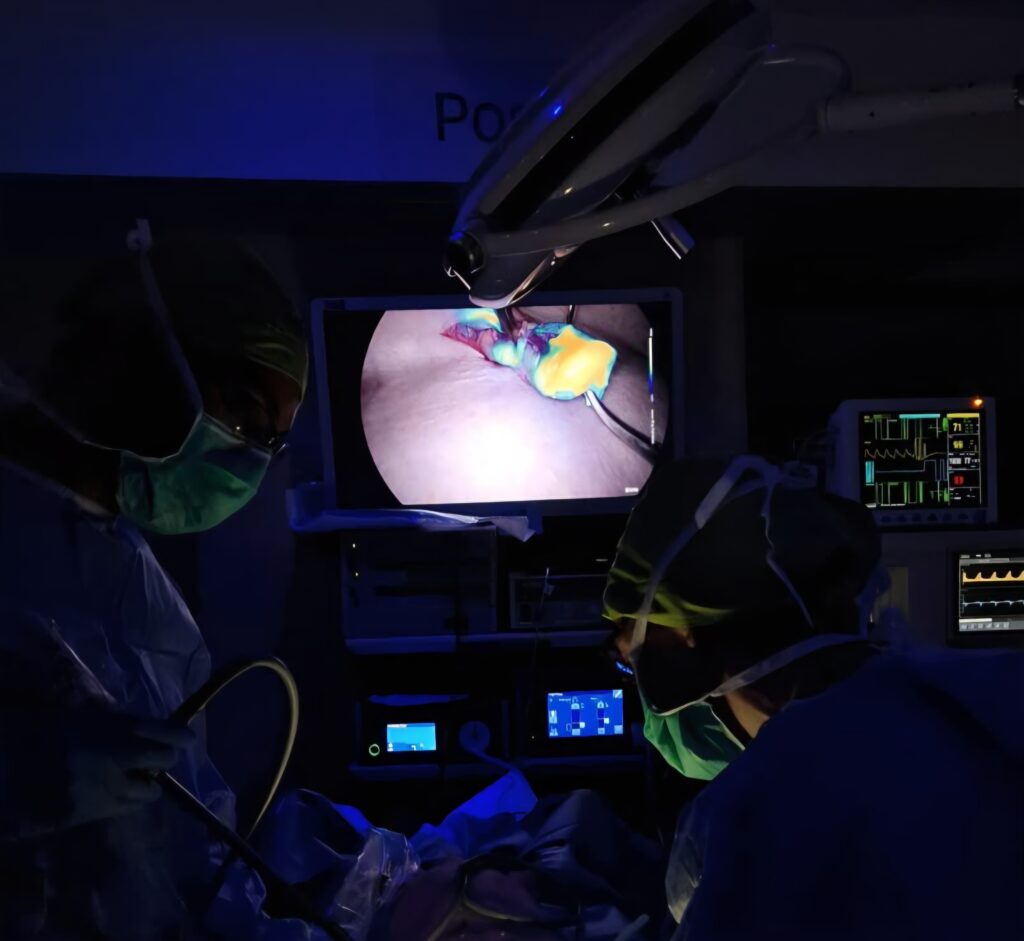
When a dog is found to have pyometra, the most common treatment is surgery to remove the uterus and ovaries (ovariohysterectomy). This is the most effective form of treatment and prevents the disease from recurring.
Before and during surgery, the dog often needs, for example, fluid therapy to stabilise its condition. If surgery is not carried out in time, the uterine infection can sometimes spread to other parts of the body or, in the worst case, the uterus can rupture, leading to peritonitis (inflammation of the abdominal lining) or sepsis (blood poisoning).
Treating these often already requires intensive care.
Medication as a treatment option: when surgery is not an option
In some cases, especially if the cervix is open, medication can be tried to treat pyometra. This option is only suitable for dogs that are otherwise healthy, and it is not always as effective as surgery.
One common form of medication is prostaglandins, which help contract the uterus and relax the cervix so that the purulent discharge can leave the uterus. This treatment is usually only given if the owner wants to preserve the dog’s breeding value.
Another option is aglepristone, which together with antibiotics can be effective against pyometra. Even so, surgery is still usually the best and most recommended treatment option. It should be noted that uterine infection easily recurs after subsequent heats, and surgical treatment may become necessary if medical treatment is not effective.
What should you know about the prognosis?
The good news is that with early diagnosis and the right treatment, most dogs recover from pyometra. However, if complications such as peritonitis develop, the risk of death increases significantly. That is why it is important to watch your dog carefully and seek treatment immediately if symptoms appear.
How to prevent pyometra?
The best way to prevent pyometra is to spay your dog. Spaying not only reduces the risk of pyometra but also prevents other cancers of the reproductive organs and unwanted pregnancies. In addition, spaying has positive effects in the treatment of epilepsy and diabetes mellitus, for example. If your dog is already spayed, the risk has practically been eliminated. But if your dog is not spayed, it is important to recognise the symptoms of pyometra and act quickly if you suspect something is wrong.
Final words for pet owners
Pyometra is a serious but treatable disease. With early diagnosis and the right treatment, your dog will recover well. If your dog is not spayed, remember to have regular veterinary check-ups and watch for possible symptoms. And remember: spaying your dog is one of the most effective ways to prevent pyometra and ensure a long and healthy life for your pet.
If you are concerned about your dog’s health or suspect pyometra, do not hesitate to contact a veterinarian. Early treatment often saves your dog’s life!